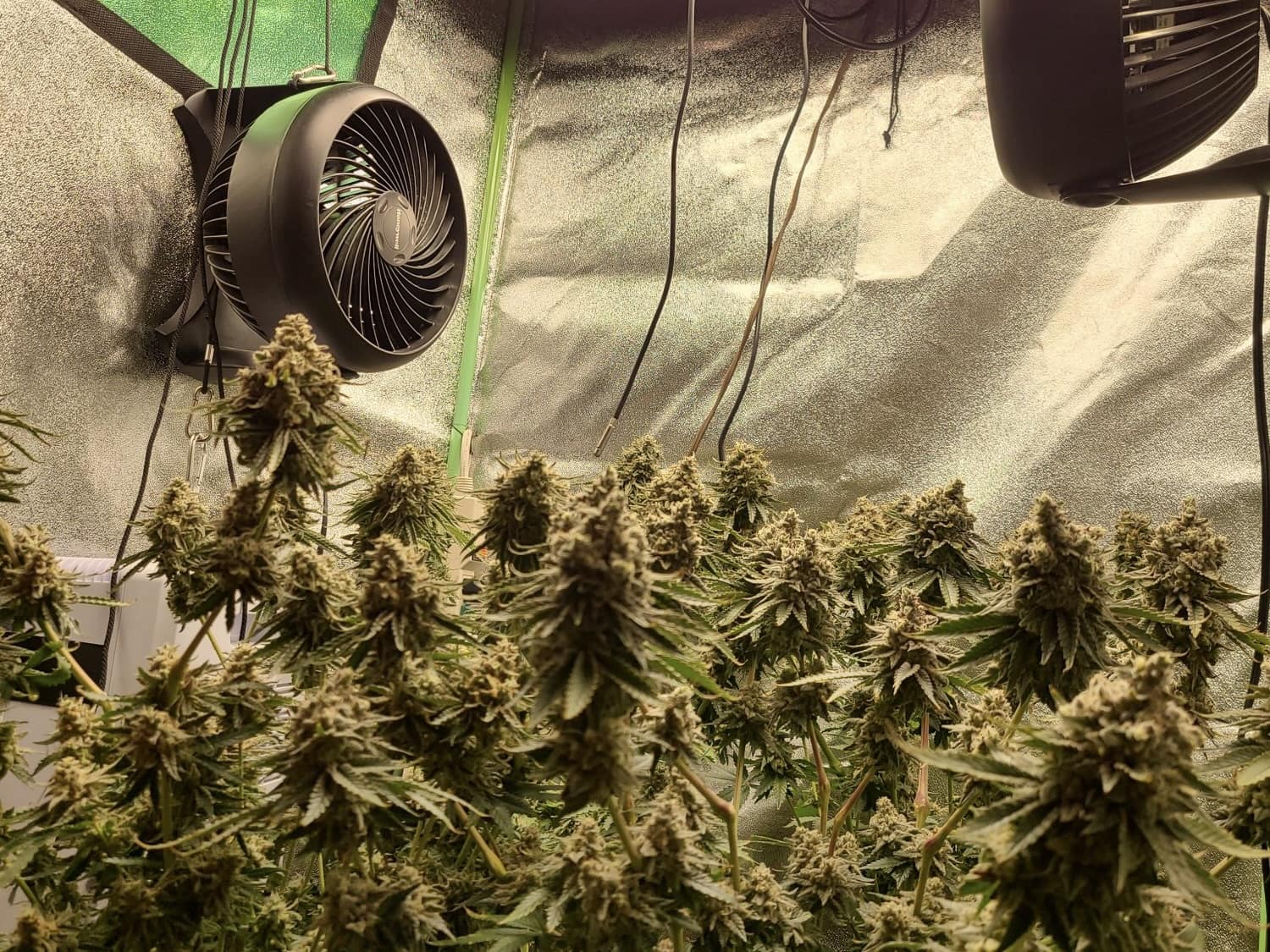
Why air movement matters – the biology behind circulation
Well-planned air circulation is one of the most important foundations for a healthy and productive indoor grow. In nature, plants are constantly exposed to wind and weather. In the grow room we have to imitate these natural stimuli artificially. Air movement performs several essential functions for the cannabis plant:
- Thigmomorphogenesis (mechanical strengthening): when plants move in the wind, microscopic tears form in the stem tissue. The plant responds by storing more lignin and cellulose in its cell walls. The result is thicker, woodier stems and branches that can later carry the weight of heavy buds during flowering without snapping.
- Breaking up the boundary layer: directly on the leaf surface, a thin layer of still air forms – the so-called boundary layer. Through transpiration this layer becomes saturated with moisture, while the CO₂ content drops due to photosynthesis. Without circulation this layer acts as a brake: the plant absorbs much less CO₂ and transpires less water. A gentle air movement keeps breaking up this boundary layer and enables optimal gas exchange.
- Preventing heat build-up (thermal stratification): grow lamps – especially sodium lamps (HPS), but also powerful LEDs – give off heat. Without circulation this heat builds up under the lamp and can damage the growing tips. Circulation mixes the warm and cold layers of air and ensures an even climate.
- Mould prevention: moisture evaporates through the leaves. In dense canopies, zones with extremely high humidity (microclimates) quickly develop. Still, humid air is the perfect breeding ground for spores of grey mould (Botrytis) and powdery mildew. Circulation keeps the leaf surfaces dry.
But as with almost all environmental factors, the same applies to wind: the dose makes the poison. Circulation is indispensable, but an airflow that is too strong, continuous or aimed directly at the plants leads to so-called wind stress (also known as “wind burn”).
What is wind stress and how does it develop?
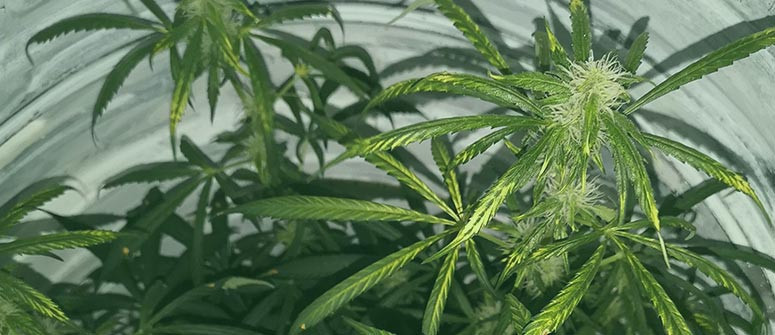
Wind stress occurs when the leaf loses moisture faster than the roots can supply water. If strong wind constantly hits a leaf, the moisture is blown away so quickly that the plant dries out acutely – even when the substrate in the pot is soaking wet.
To protect itself, the plant closes its stomata completely to stop the water loss. This has serious consequences:
- Photosynthesis stops: with closed stomata no more CO₂ can be absorbed. Energy production comes to a halt.
- Nutrient lockout: because no more water is transpired, the sap flow (transpiration pull) in the plant stalls. Nutrients such as calcium, which are carried passively with the water, no longer reach the growing tips. Deficiency symptoms are the result.
- Cell damage: the leaf edges dry out, become brittle, discolour and eventually die off.
Recognising and distinguishing the symptoms of wind damage
It is important to recognise the symptoms of wind shock early and not to confuse them with nutrient problems or watering mistakes.
| Symptom | Cause by wind stress | Difference from other problems |
|---|---|---|
| Clawing (downward-curling leaves) | The leaf bends limply downwards to reduce its surface area exposed to the wind. The leaves often feel soft or leathery. | With nitrogen excess the claws are dark green and break easily. With overwatering the whole leaves, including the stalks, hang down limply. |
| Brown or yellow spots on the edges | Local drying out of the tissue. Occurs almost exclusively on the side of the plant facing the fan. | Potassium deficiency shows on the leaf edges of the whole plant (especially lower down). Light burn only affects the tops directly under the lamp. |
| Twisted and deformed leaves | Irregular growth, because the plant tries to turn away from the wind through uneven cell growth. | Pests (e.g. broad mites) also cause deformed leaves, often together with fine webbing or shiny leaf undersides. |
| Stunted growth & thin shoots | The closed stomata block photosynthesis. The plant stays in survival mode. | With wind stress usually local to individual plants, whereas a lack of nutrients or light usually affects the whole grow. |
Step-by-step: perfect air circulation in the grow room
To achieve an optimal microclimate without wind damage, it is best to plan the installation of your circulation and extraction components systematically.
Step 1: understanding how extraction and circulation work together
The extraction (carbon filter + inline fan) provides air exchange. It removes used, humid air and creates negative pressure in the tent, so fresh air flows in passively. The circulation (circulation fans), on the other hand, does not exchange air but moves the air already in the room. Both systems need to be matched to each other.
Step 2: choosing the fans
For smaller grow tents (up to 120x120 cm) it is best to use oscillating clip fans. These attach directly to the tent poles and swing back and forth automatically. Fixed fans produce a directed jet of wind that almost always leads to wind damage if it is too close to the plants.
For larger rooms, oscillating pedestal fans or wall-mounted circulation fans with several settings are the best choice.
Step 3: positioning and direction
The golden rule is: never point fans directly at the canopy.
- Above the canopy: position a fan so that it blows the airflow over the tops of the plants. Angle it slightly upwards against the tent wall or ceiling. The air bounces back and descends as a gentle, swirling breeze. At the same time this cools the warm zone under the lamp.
- Below the canopy: place a smaller fan in the bottom third of the tent (below the net or the main buds). It should blow underneath the pots, so that pockets of humid air near the floor are moved and the substrate dries evenly.
- Indirect airflow: use the walls of your grow tent as a diffuser. If the wind bounces back off the reflective inner wall, it loses its harmful force, but the airflow remains.
Step 4: setting the wind speed
The leaves of your cannabis plants should sway and tremble gently in the airflow. If the leaves flap or whip wildly, or constantly bend to one side, the wind is far too strong. Use stepless speed controllers or EC fans to dose the power precisely.
Fan settings per growth phase
The needs and resilience of cannabis plants change enormously during their life cycle. Adjust the circulation accordingly:
Phase 1: propagation (clones & seedlings)
Young seedlings and unrooted clones do not yet have a root system that absorbs water quickly enough. At the same time their leaf surface is sensitive. Drying wind makes them dry out and die very quickly.
Advice: switch circulation fans off completely or point them very weakly at the tent wall. Protect seedlings under a mini greenhouse (propagator). Relative humidity should be 70–80%. Keep air movement to a minimum.
Phase 2: vegetative phase (growth)
As soon as the plants have a solid root system and 3–4 true leaf pairs, the phase of actively stimulating growth begins.
Advice: switch oscillating fans on at a low setting. Place them at least 40 cm from the plants. The leaves should move slightly. This stimulates thickening of the stem and prepares the plant for heavy flowering. Target VPD: 0.8–1.2 kPa (more on this in the VPD guide with calculator).
Phase 3: flowering phase (weeks 1–4)
The plants stretch and form a dense canopy. Light intensity is now at its highest, which also produces more heat.
Advice: increase the circulation. Place one fan above the canopy and a second one below it. The air movement must be constant to remove moisture from the dense jungle. Still avoid direct jets of wind.
Phase 4: late flowering (week 5 until harvest)
The buds become extremely dense and heavy. The risk of bud rot (Botrytis) rises every day, because moisture stays trapped inside the buds.
Advice: maximum circulation. Use several oscillating fans for continuous, chaotic air movement throughout the room. There should be no more pockets of still air. Monitor relative humidity strictly (below 45–50%) and make sure the circulation runs 24 hours a day.
The underestimated danger: circulation during the dark period
Many growers switch their circulation fans off together with the lamps via a timer, to save electricity or reduce noise at night. This is one of the most common causes of mould outbreaks shortly before harvest.
When the light goes out, the temperature in the grow room drops by several degrees within a few minutes. Because cold air can hold much less moisture than warm air, the relative humidity (RH) rises in one go. In the worst case, water condenses directly on the leaves and the cool buds (the dew point is reached).
If there is no air movement in this critical phase either, still, humid zones develop. Mould spores need only a few hours in a humid, warm environment to germinate and infect the tissue. That is why circulation should always run continuously (24/7). At night you can reduce the power slightly if needed, but the circulation should never stop completely.
Professional equipment for climate control
To avoid wind stress and at the same time prevent mould effectively, it is best to choose high-quality, adjustable components. In the Grow24 shop you will find a selection of professional circulation and control equipment:
- EC circulation fans: unlike classic AC motors, EC fans are steplessly adjustable and use up to 70% less electricity. They are extremely quiet and provide an even airflow.
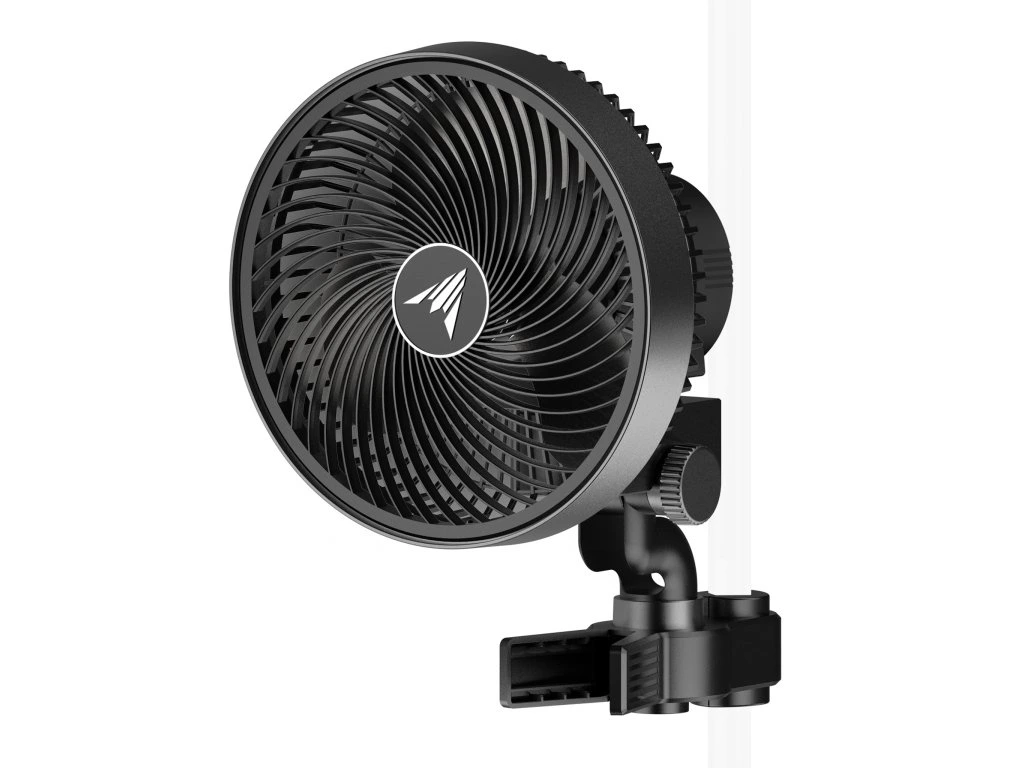
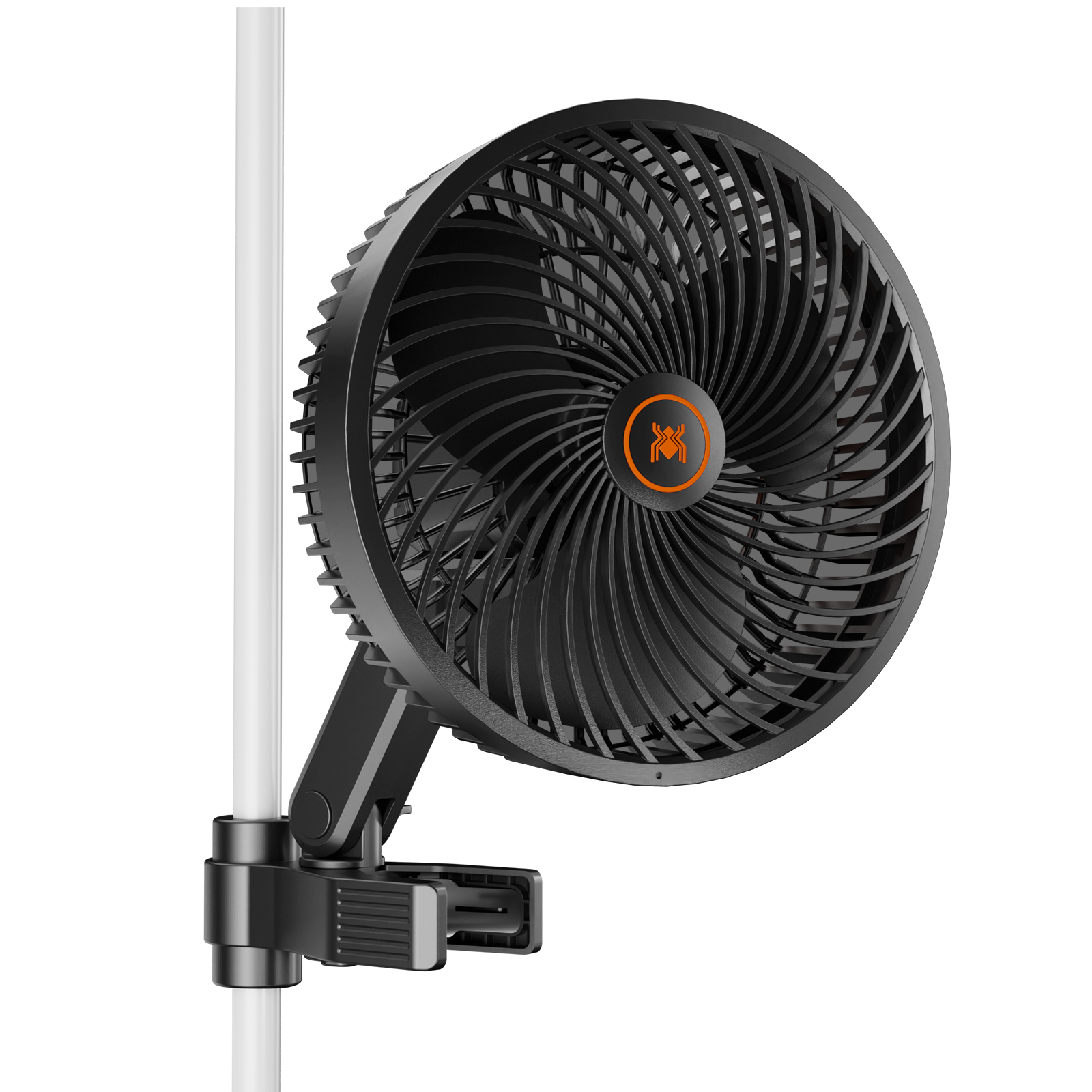
- Oscillating clip fans: specially designed for use in grow tents. Thanks to reinforced clamps they do not slip off the tent poles.
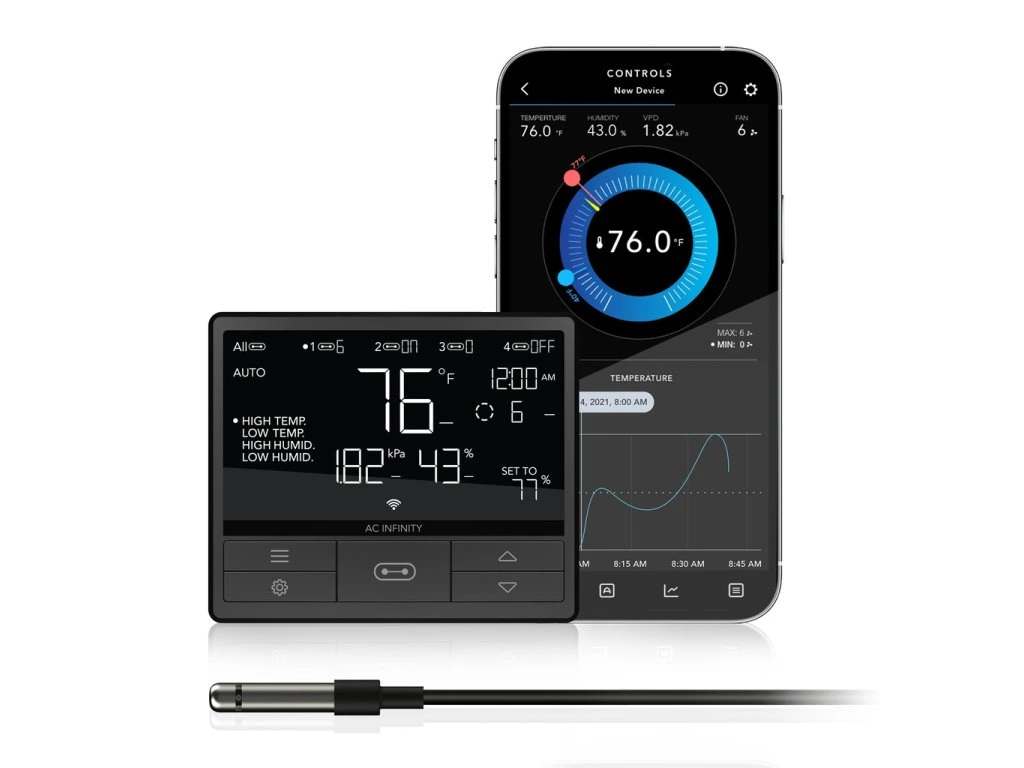
- Climate controllers: smart controllers (such as the AC Infinity CONTROLLER 69 PRO) dynamically adjust the speed of your extraction and circulation fans based on temperature, humidity and VPD. If humidity rises at night, the controller automatically increases circulation and extraction to prevent condensation.
Matching fans & control
Oscillating EC clip fans and a controller that regulates circulation and extraction by temperature, humidity and VPD.
👉 View all fans in the Grow24 shop
❓ FAQ: frequently asked questions about circulation and wind damage
Q: Do I really need circulation fans at night?
A: Yes, absolutely! The risk of mould is greatest at night. When the lamps go out, the temperature drops and the relative humidity rises sharply. Without circulation this moisture condenses on the cool buds and leads to bud rot. Circulation must run 24 hours a day.
Q: Can I compensate for wind stress with more nutrients?
A: No, quite the opposite! Plants with wind stress transpire abnormally. If you feed more now, the nutrient salts accumulate unused in the substrate, because the plant barely absorbs water. This leads to salt build-up in the root zone and severe nutrient burn. With wind stress, reduce feeding slightly and tackle the source of the wind.
Q: My leaves are already curled (clawing) – will they recover?
A: Leaves that have been badly damaged, dried out or deformed by persistent wind stress usually do not fully recover. That is no cause for concern: as soon as you move the fan, new growth will grow back completely normal and healthy. Remove badly dried-out leaves at the top so that light reaches the shoots below.
Q: How do I measure whether the wind in my tent is too strong?
A: A simple test: hold your hand at canopy height. You should feel a gentle airflow, like a warm summer breeze. The leaves should tremble slightly or sway gently back and forth. If the leaves flap violently or you hear loud wind noise in the tent, the circulation is too strong.
Q: Is a fixed fan useless?
A: No, fixed fans can be used in a targeted way to blow air towards walls or corners where moisture lingers. They just must not be aimed directly at the plants. If you use a fixed fan, point it upwards over the canopy towards the tent ceiling.
Q: Do fans keep fungus gnats or other pests away?
A: Strong air movement makes it harder for flying pests such as fungus gnats, whitefly or leaf miners to land on the leaves and lay eggs. In addition, the top layer of substrate dries faster due to the air movement, which makes it harder for fungus gnats to lay their eggs. Circulation is therefore excellent passive protection within integrated pest management.