What is pruning?
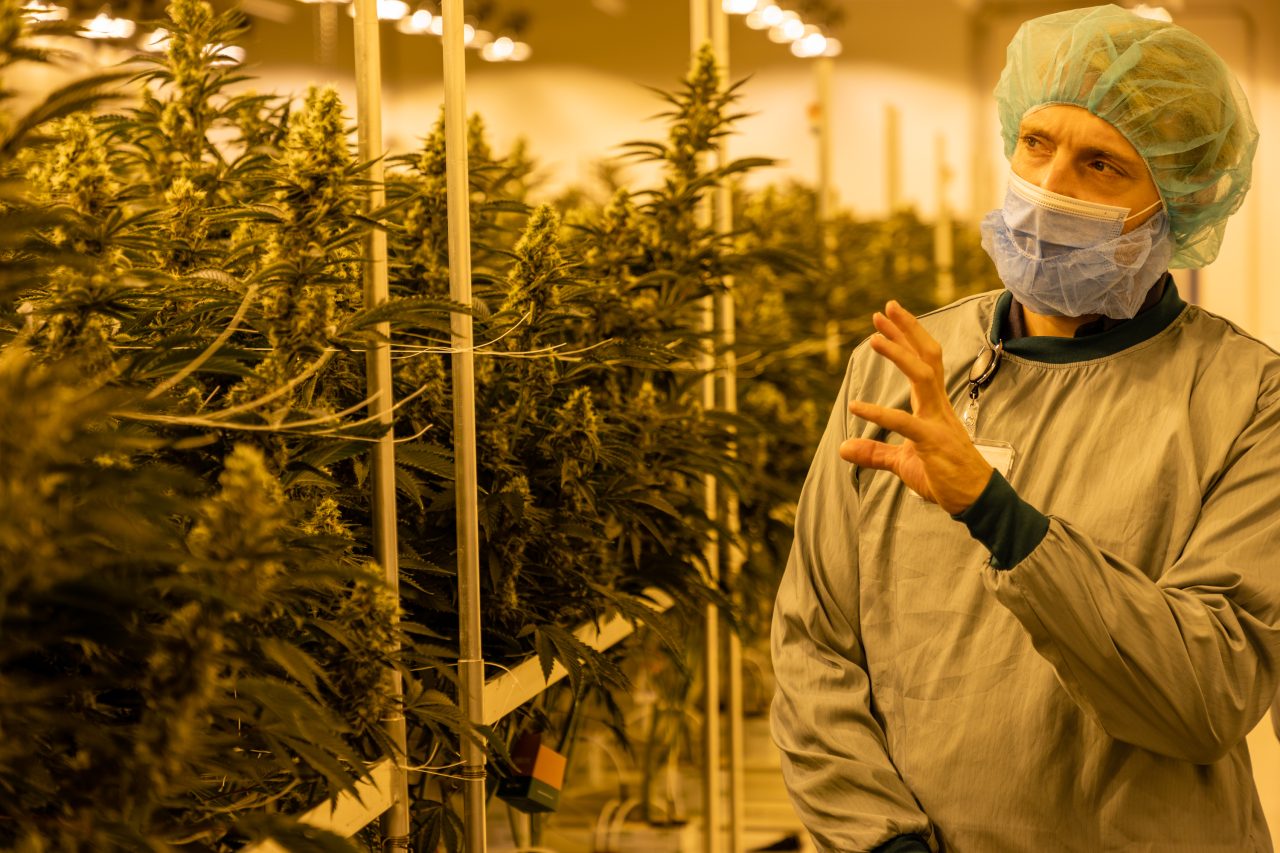
Pruning not only increases the yield, but in most cases is an indispensable task when caring for your plants. If you let growth run its course, your plants grow unevenly. Usually one dominant main top (main cola) develops, while the branches below it only form small, airy "popcorn buds".
With sharp pruning shears you can steer the growth of your plants in a targeted way! That matters both indoors and outdoors – but it is especially important for indoor growing.
In a grow tent you usually have only limited height. With a bit of luck that is 1.80 to 2 metres. Subtract the pots, the lamp suspension and the safe distance to the grow light, and much less usable height remains. That is why you need to keep the vertical growth of your plants under control!
In tight grow setups, pruning is an absolute necessity. Maximum yield is only possible if you create a flat, even canopy. The plant does not do that by itself – it needs your help.
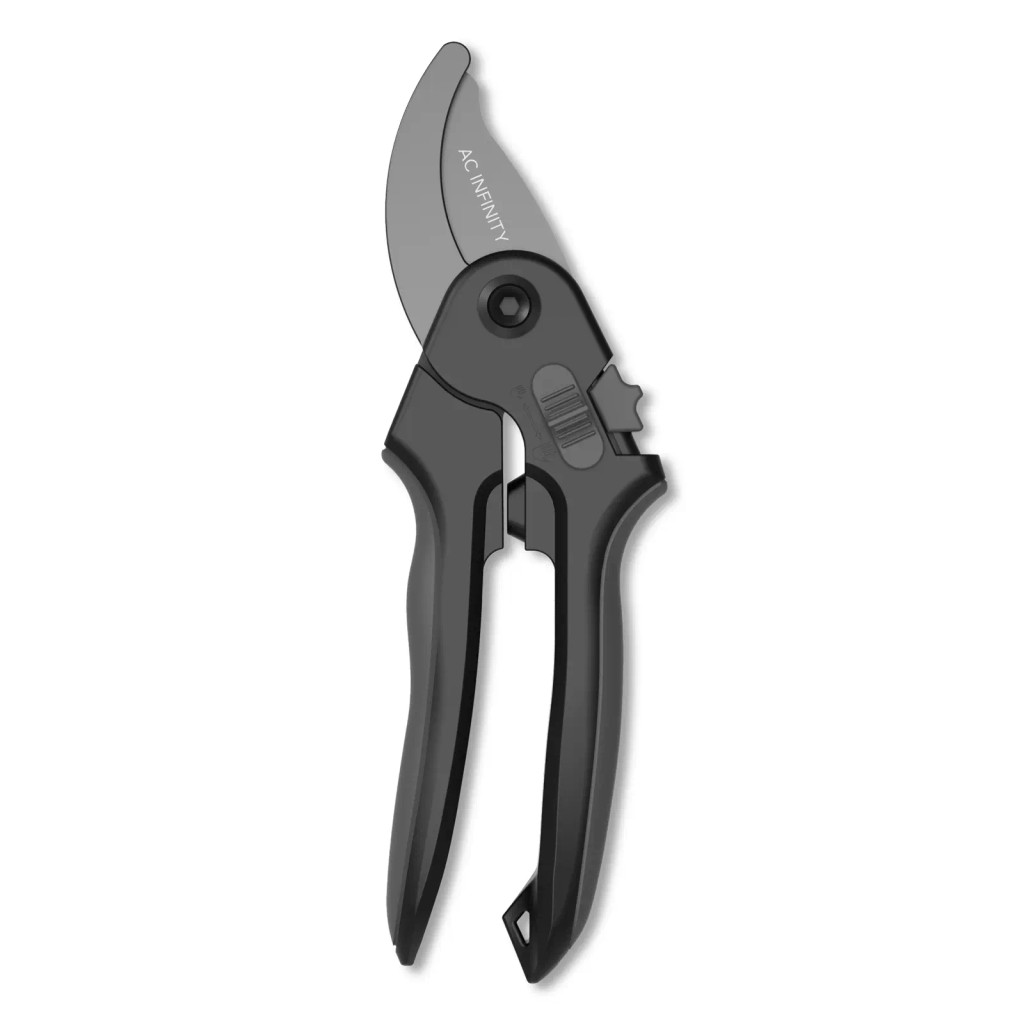
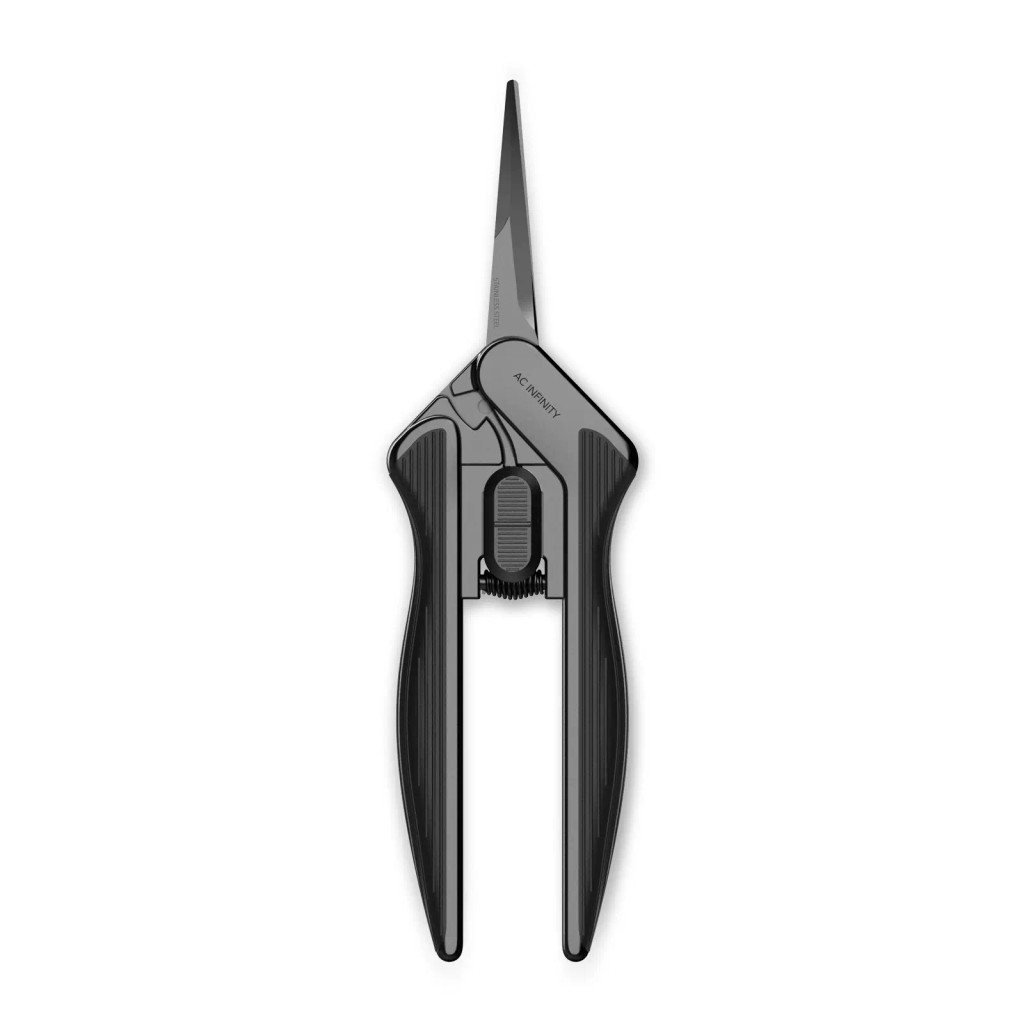
Recommended pruning tools
Sharp, clean blades make smooth cuts and allow wounds to heal quickly.

Different pruning techniques to increase yield
Simply put, pruning means removing certain shoots of the plant with scissors or a blade.
With the simplest form of pruning you only remove the dominant main shoot. However, there are also more complex techniques that produce impressively bushy plants with a large number of tops. We take a closer look at them below.
Topping (cutting off the main shoot)
Topping is a very simple pruning technique with excellent results. It brings light to places that would otherwise be in the shade, and doubles the number of main tops with every cut.
Instead of one dominant main top, you can create 4 or more equal colas. You can repeat topping several times, but beyond a certain point it yields less and less extra.
Does topping really increase yield?
Some growers claim that topping does not increase yield, because the individual tops get smaller with every cut. In practice, however, the total yield (the weight of all tops together) is usually higher for topped plants – especially under artificial light with limited height. The reason: the light is distributed more evenly over several shoots of equal height instead of over a single top.
Guide: how to top your plants properly
Start topping when your plant is about 25 cm tall and has formed at least 4 to 5 nodes. Look for small side shoots in the lower leaf axils – that shows the plant is strong enough.
Then simply cut off the top, newest shoot directly above the last node. After a few days, two new main shoots grow from the leaf axils below.
The cut initially puts the plant into shock and it grows more slowly for 1 to 3 days. As soon as it has recovered and the new shoots have formed a few nodes again, you can top them again to turn two shoots into four. Always give the plant enough time between cuts (about a week) to process the stress.
FIMming (FIM method)
FIMming (derived from "Fuck I missed") is very similar to topping, but aims to produce even more shoots with a single cut.
Whereas topping cuts the shoot off completely, FIMming removes only about 70 to 80% of the growing tip. This often produces three to four (instead of two) new shoots at the cut – but the result is less predictable than with topping. After FIMming the plant usually needs a little more recovery time than after a clean topping cut, so wait a little longer between cuts.
Lollipopping (removing the lower shoots)
Lollipopping is a pruning technique that focuses on removing the lower growth of the plant. Whereas topping and FIMming produce new shoots, lollipopping directs as much energy as possible to the tops that are already at the top.
The logic is simple: the lower branches of the plant receive hardly any light because they hang in the shade of the upper canopy. Tops in these shaded spots never ripen fully and stay small and airy.
By cutting away these unproductive shoots shortly before flowering, the plant sends all its energy to the upper part, directly under the lamp. This creates the lollipop shape the technique is named after (a bare stem at the bottom, a dense crown of tops at the top).
Does lollipopping increase yield?
Yes. With lollipopping, many growers achieve clearly higher and more even yields of top-quality buds. Lollipopping combines very well with topping or FIMming: top in the early vegetative phase and lollipop shortly before flowering.
Guide: how to lollipop
Lollipopping is easy. The best time is the last week of the vegetative phase or the first two weeks after switching to flowering (12/12 light schedule).
Look at your plant from the side. Remove everything in the lower third (or, with very dense plants, even up to half) that hangs in deep shade. Cut leaves and weak side shoots directly at the stem. Make sure you do not damage any main branches that have made it into the upper light.
Important tips for pruning
Can you prune during flowering?
Avoid radical cuts (topping/FIMming) during flowering, as this disrupts the plant's hormone balance and slows the development of the buds. Removing individual large fan leaves that shade lower buds (defoliation) is fine in the first weeks of flowering, but do it in moderation.
Don't overdo it (overpruning)
Don't overdo it. Less is often more! Every cut means stress and a wound the plant has to close. Only prune healthy, well-cared-for plants – let stressed plants (drought, nutrient deficiency, pests) recover first.
Maintaining your pruning shears
A good pair of harvest scissors lasts many years if properly maintained. Always keep the blades sharp. Blunt scissors crush the tissue instead of cutting it cleanly, which increases the risk of infection. Disinfect your scissors regularly (for example with alcohol), especially when moving from one plant to another, to prevent the transfer of viruses or fungi.
What are the best pruning shears?
Ergonomic handles and a good spring are important to prevent fatigue while working.
👉 View all scissors in the Grow24 shop
Conclusion: pruning for maximum yield
In summary, targeted pruning is one of the simplest and most effective ways to increase yield and quality in indoor growing. Other methods such as LST (low stress training), ScrOG (Screen of Green) or SOG (Sea of Green) complement pruning well. Important after every cut: stable conditions – read our guides on VPD and circulation & wind damage as well.
❓ FAQ: frequently asked questions about pruning
Q: How long does it take for a plant to recover after topping?
A: Recovery normally takes 3 to 7 days. During that time the plant almost completely stops growing in height and focuses on building the supply lines to the new side shoots.
Q: Can I prune autoflowering strains?
A: Caution is advised with autoflowers. Because their lifespan is genetically fixed, they hardly have time to recover from stressful cuts such as topping. With autos it is better to bend gently (LST) and at most lightly lollipop the lowest branches.
Q: What is the difference between pruning and defoliation?
A: Pruning removes entire shoots or branches to change the shape of the plant. Defoliation removes only leaves in a targeted way (usually large fan leaves) to improve light penetration and air circulation in the canopy.