


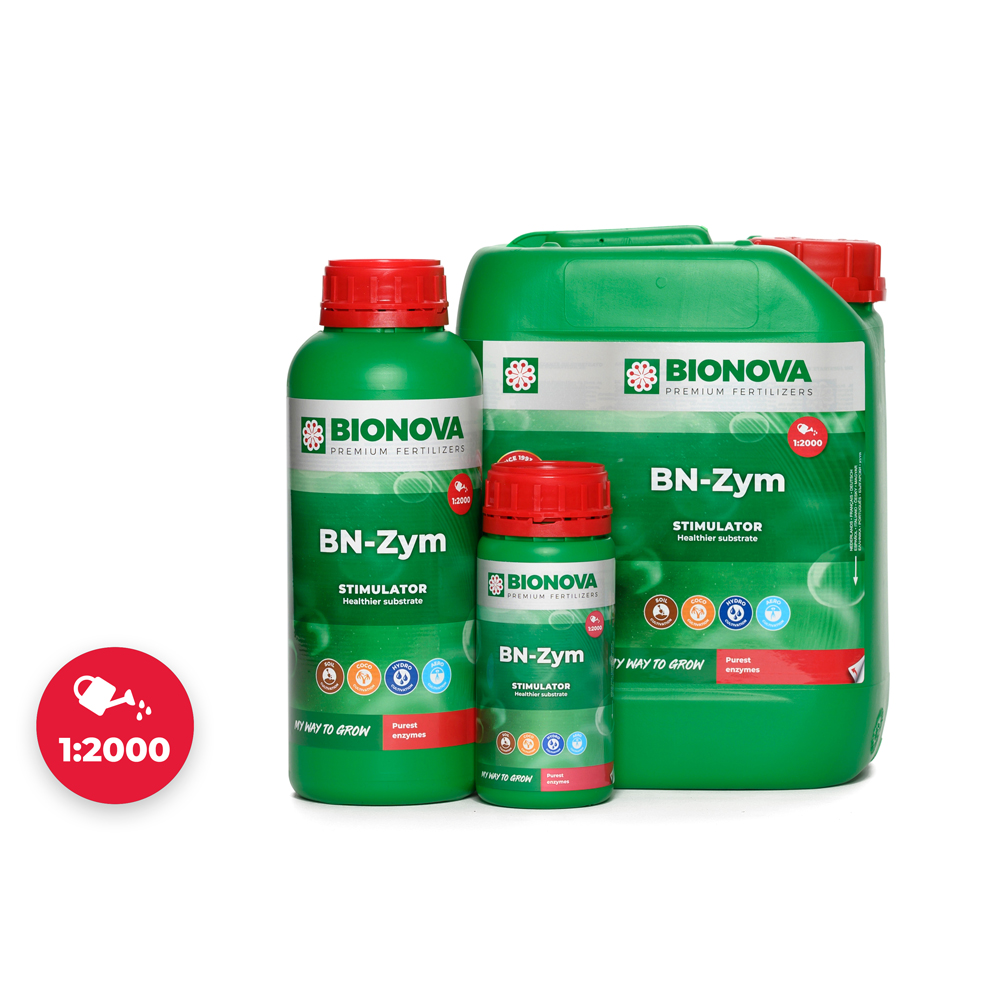
BN-Zym
€24.50
Product information "BN-Zym"
BN-Zym
The substrate energiser
WHY
Bionova Zym is a natural biocatalyst!
Stimulates the water-holding capacity of any medium and reduces the surface tension of water!
Bionova Zym brings more oxygen into your substrate!
Speeds up flushing from 2 weeks to 4 days!
What is BN-Zym?
Zym brings increased bacterial activity that converts nutrients and minerals in your substrate into material the roots can absorb directly. BN-Zym catalyses waste products and returns them to the plants in the form of absorbable nutrients. It also keeps the medium clean and free of all kinds of excess components. This is important for every grow, and especially for those who reuse their soil and coco substrates.
When should BN-Zym be used?
BN-Zym can be used from the first week of growth until the last week of flowering. BN-Zym can be used in combination with all Bionova nutrients, stimulators, minerals, universal products and substrates. Bionova Zym can be used for watering and as a foliar spray.
How should BN-Zym be used?
Application via watering
Continuously 5-10 ml per 10 litres of water.
Application as a foliar spray
Cannot be used as a foliar spray
Tips from the growers!
To get the most out of the enzyme solution, it should be applied directly to the soil.
Remember that the important enzymes are found in the soil around the plant’s root system.
Healthier substrate
WHAT’S INSIDE?
Potassium:
1. Potassium regulates the opening and closing of stomata and thus the uptake of CO2, which improves photosynthesis.
2. It triggers the activation of important biochemical enzymes for the formation of adenosine triphosphate (ATP). ATP provides energy for other chemical and physiological processes such as the excretion of waste products in plants.
3. It plays a role in the osmoregulation of water and other salts in plant tissues and cells.
4. Potassium also facilitates protein and starch synthesis in plants.
5. It activates enzymes responsible for specific functions.
Beta-glucanase:
1. Plays a key role in cell division, material transport through plasmodesmata and resistance to abiotic stress, and is involved in everything from flower formation to seed ripening.
2. Commonly known as pathogenesis-related (PR) proteins, which play an important role not only in plant defence against fungal pathogens but also in plant physiological and developmental processes.
Xylanase:
1. Plays an important role for microorganisms that thrive on plant sources, breaking down plant material into usable nutrients.
2. Breaks down the linear polysaccharide xylan into xylose, thereby breaking down hemicellulose, one of the main components of plant cell walls.
Cellulase:
1. Cellulase enzymes are used to break down the cellulose of plant cell walls into simple sugars that microbes can convert (ferment) into fuels, mainly ethanol, as well as chemicals, plastics, fibres, detergents, pharmaceuticals and many other products.
2. Plays an important role in the global carbon cycle by breaking down insoluble cellulose into soluble sugars.
3. Cellulases are used to break down the cell wall and obtain protoplasts. Cellulases are synthesised by certain microorganisms (bacteria, fungi, protozoa).
Organic soil improver
0.5% phosphorus pentoxide (P2O5)
0.27% potassium oxide (K2O)
Also contains: pectinase, amylase, cellulase. All enzymes used are free of animal substances.
Login